
EN
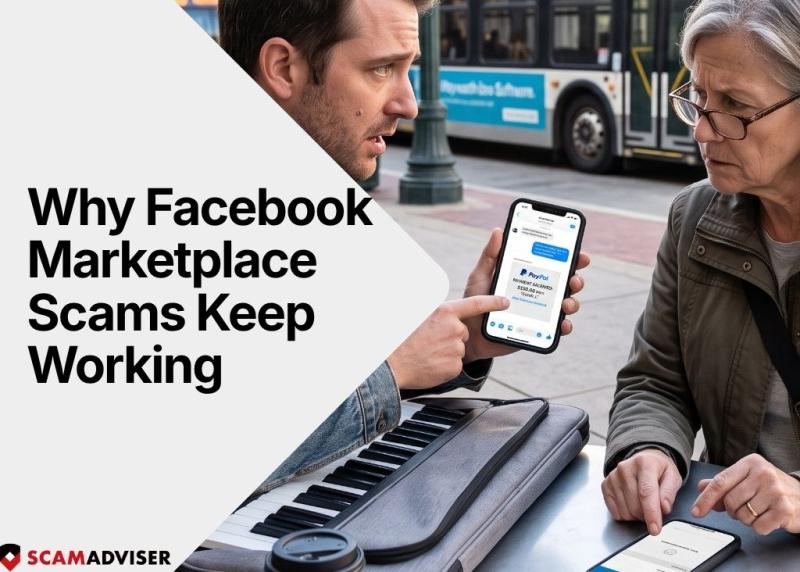
Every Facebook Marketplace scam follows the same basic trick: getting you to trust someone else's "proof" instead of verifying it yourself. Once you understand that pattern, the most common scams become much easier to spot and avoid.
In a Nutshell
The safest approach is to meet in person, use protected payment methods, never share verification codes, and ignore any deal that relies on urgency or pressure.
Search "Facebook Marketplace scams" and you get the same list everywhere. Watch out for low prices. Meet in public. Don't ship before you're paid. None of that is wrong. It also doesn't explain why people who already know all three rules still lose money every week.
Here's what actually happens. Facebook Marketplace has no checkout system, no escrow, and almost no way to confirm who is really on the other end of the chat. Every scam on the platform grows out of that one gap. Once you see the gap, the scams stop looking like a long, random list and start looking like the same trick wearing different clothes.
In a normal sale, you control the proof. You watch the money land in your account. You hand over the item once you've seen it yourself. You never have to take the other person's word for anything.
Scammers reverse that order. They send a screenshot instead of a real payment. They send a link and ask you to "verify" something on it. They tell a story about why the money is delayed and ask you to act now anyway. Underneath all the variations, the ask is always the same: believe their version of events instead of checking your own.
That's the tell. If someone wants you to trust their proof instead of your own bank app, the deal is already off.
This is also where a tool like ScamAdviser earns its place in your routine. ScamAdviser checks websites and links against domain age, ownership records, hosting history, and known fraud reports, and gives you a trust score in seconds. A buyer sends you a "Zelle upgrade" link, a shipping label site, or a payment portal you've never heard of? Paste it into ScamAdviser before you click anything. A domain registered three weeks ago pretending to be your bank's payment processor will usually show up as high risk immediately, and that's often all the warning you need.
The overpayment refund request. A buyer "accidentally" sends more than the price and asks for the difference back. Sometimes the payment screenshot is faked and no money moves at all. Sometimes real money does land, sent from a stolen card or a bad check, and it gets reversed days after you've already sent the refund.
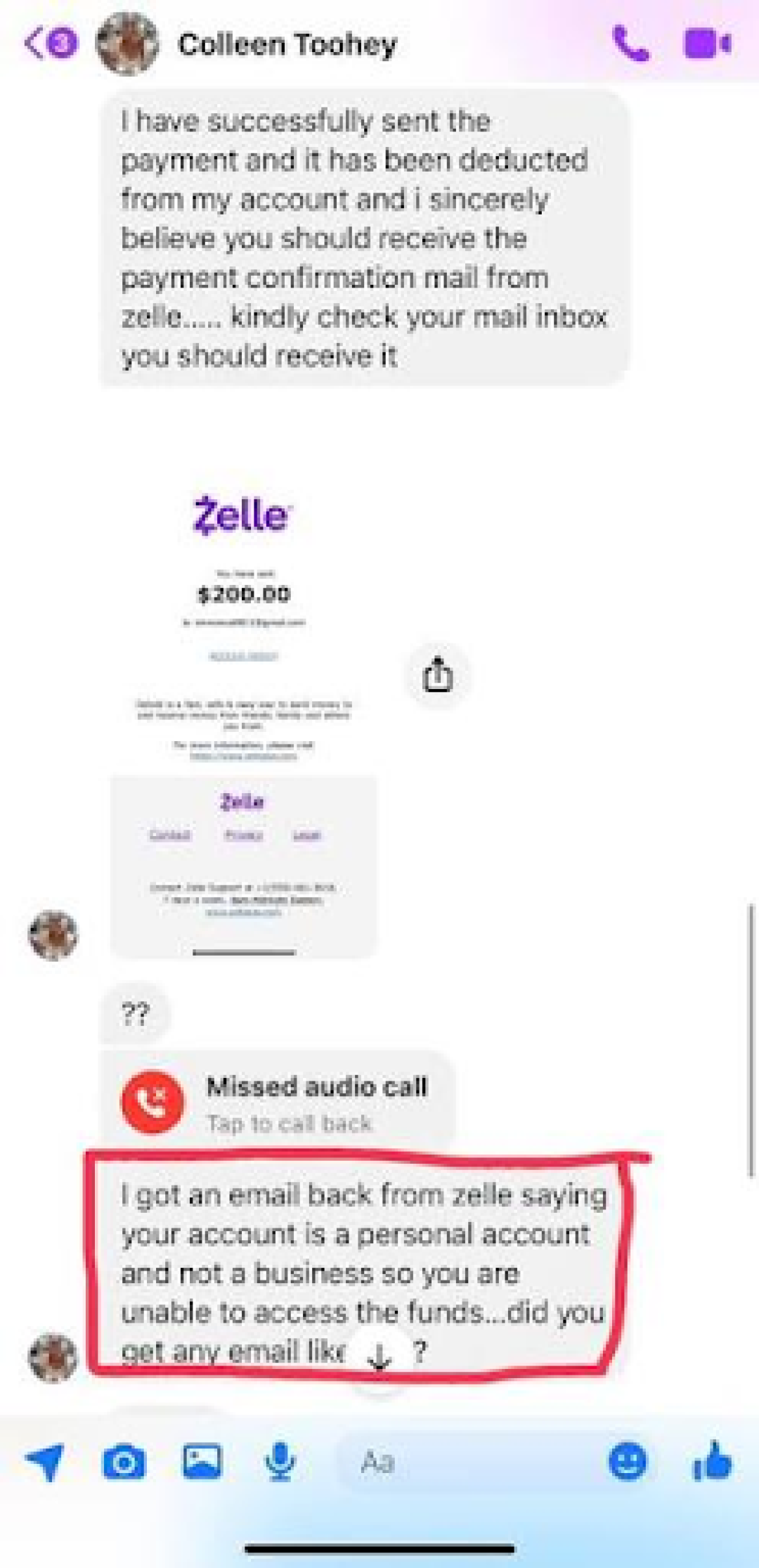
The account upgrade request. This version has spread through 2026. A buyer agrees to pay by Zelle, then forwards an email claiming your account needs a paid "business upgrade" before the payment can go through. The buyer offers to cover the fee if you send it first, promising reimbursement along with the original payment. Zelle has no such upgrade fee. The email is spoofed. Before doing anything with a link like this, run it through ScamAdviser, since a spoofed page is one of the easier things for a domain checker to catch.
The verification code request. A buyer messages to "confirm you're real" and sends you a six-digit code, asking you to read it back. That code is a real login code, usually tied to a Google Voice number, generated so the buyer can register a phone number under your name. Once they have it, they run the same scam on the next person, using your number. Never read a code back to anyone, no matter what reason they give.
The shipping label offer. A buyer for a cheap or free item offers to send a prepaid label so you skip the postage cost. The label is frequently fake, or it exists mainly to collect your name and address. For anything low value, it isn't worth the exposure. Ask for local pickup instead.
Listings for things that were never really for sale draw the most bait, because the demand around concert tickets, apartments, cars, and hot electronics is real even when the listing isn't. The seller asks for a deposit before you can see the item, and leans on distance, a sudden emergency, or "other buyers waiting" to explain why you can't wait to check it out first.
A profile photo and a friends list feel like proof of a real person, but neither is hard to fake or buy secondhand. An account created recently, with no other listings, that won't get on a video call or meet in person, has already told you what you need to know.
Messages claiming to be from Facebook, PayPal, or your bank sometimes arrive right inside Messenger, asking you to log in through a link to "verify" a payment. The page can look exactly right. Don't click through it. Go to the site directly, or check the link with ScamAdviser first if you want to see how new or how flagged the domain already is.
Vehicle sales carry more risk than nearly anything else on the platform, and the tricks have gotten more elaborate. Some listings run on cloned VINs or salvage titles cleaned up to pass a glance. On the selling side, a "buyer" agrees on a price, brings a fake "bank representative" into the chat to make everything look official, and leaves with the car, a bounced payment, or both.
If you're selling, don't hand over keys or a title until the payment has cleared in your own account, confirmed by your own bank rather than anything the buyer shows you. If you're buying, pull the VIN and run a vehicle history report before sending a cent, and treat any seller who won't meet in person as a closed door, not a puzzle to solve.
Meet in person for anything worth real money, and bring someone along if that feels safer. Pay through something that actually protects both sides, like Facebook's own checkout or PayPal Goods and Services, and stay away from Zelle, Venmo, wire transfers, and gift cards with people you've never met. Run unfamiliar links through something like ScamAdviser before you trust them with your login or your money. Never read a verification code out to anyone, for any reason. And when a deal suddenly needs to happen right now, whether that's a countdown, a rush to beat other buyers, or a seller who "can't wait another hour," treat the urgency itself as the warning, not the excuse to skip your own checks.
Cut off contact with the other party right away. Report the profile and the listing through Facebook, since this is also what gets fraudulent accounts taken down. Call your bank or payment provider and ask about reversing the charge, even if you've already been told that's not possible. File a report at reportfraud.ftc.gov, and if you're in the US, file one with the FBI's Internet Crime Complaint Center at IC3.gov too. None of this guarantees your money comes back, but it slows the person down before they reach whoever's next, and it builds the record you'll need if your bank does look into it.
Facebook Marketplace isn't more dangerous than any other place to buy or sell online. It's just less structured, so checking who you're dealing with falls entirely on you. Once you stop taking anyone else's proof at face value, and start confirming links and accounts yourself instead, most of what's on this page stops being able to reach you.
See more interesting articles from ScamAdviser:
Adam Collins is a cybersecurity researcher at ScamAdviser who operates under a pseudonym for privacy and security. With over four years on the digital frontlines, he specialises in translating complex threats into actionable advice. His mission: exposing red flags so you can navigate the web with confidence.
