
EN
This article has been updated by Jamie James on June 9 with the latest data and analysis we have found using real user reports and experiences submitted to ScamAdviser.
Gift card scams are very common on the internet. You may have heard them from the “DO NOT REDEEM!!” videos. Yes, those videos are targeting victims to steal money using gift cards. What you should know is that a gift card should pay for products or services from the company that issued it. It should not pay taxes, fines, rent deposits, tech support fees, delivery costs, debts, or online sellers you do not know.
We, as ScamAdviser, track scam patterns across millions of websites and have identified more than 2.6 million scam websites in our database. This also includes gift card scams. Many gift card scams start online through fake shops, phishing pages, fake prize messages, marketplace listings, or cloned brand websites before the scammer asks for the card code.
Gift cards are usually used in online scams. In this type of scam, someone tricks you into buying a gift card and sharing its number, PIN, barcode, or receipt.
The scammer does not need the physical card. They only need the code. Once they receive it, they can spend the balance, resell it, or move the value to another account.
These scams can start through:
The story changes, but the majority of the scheme stays the same. Someone wants you to buy a gift card and send the code.
There isn’t a secret reason behind it. It is only because gift cards can be quickly converted into money. Faster than most of the other scams.
Gift cards are a popular choice for criminals because they can be purchased almost anywhere. Supermarkets, gas stations, pharmacies, retail stores, and online shops all sell them. The scammer can stay far away and still collect the code by phone, chat, or email.
Another reason is that gift cards give victims less protection than credit cards or bank payments. A credit card payment may allow a dispute. A shared gift card code often leaves very little room for recovery.
Scammers also like gift cards because they can hide behind fake names, fake phone numbers, and fake accounts. By the time a victim notices the scam, the balance may already be gone.
Gift card scams are a large part of the wider online fraud problem.
Our global scam research found an estimated 293 million scam reports worldwide in 2021, with $55.3 billion lost. ScamAdviser also states that it checks more than 1 million new sites and reaches millions of consumers each month through its website and data partners.
Gift card scams continue because they fit many different fraud stories. A fake tax call, a romance scam, a fake shop, and a fake prize email can all end with the same payment request: “Buy a gift card and send me the code.”
Recent fraud data also shows large losses linked to gift cards and prepaid cards. In 2024, U.S. consumers reported more than 41,000 fraud cases involving gift cards and prepaid cards, with $212 million in losses. The real number may be higher because many victims do not report small losses, shame, or failed recovery attempts.
As you may have guessed, there are various types of gift card scams. The story changes depending on the victim, the platform, and the pressure point, but at the end of the day, scammers usually want one thing, money.
In most cases, the scammer first creates fear, trust, excitement, or urgency. Then they ask for the same thing: “Buy a gift card and send me the code.”
In this scam, someone pretends to work for the police, tax office, immigration office, court, customs office, or another government body.
They may say things like:
This is a scam. Real government offices do not ask for gift cards to pay taxes, fines, bail, immigration fees, or legal charges.
If this happens, hang up. Then contact the real agency through its official website or phone number.
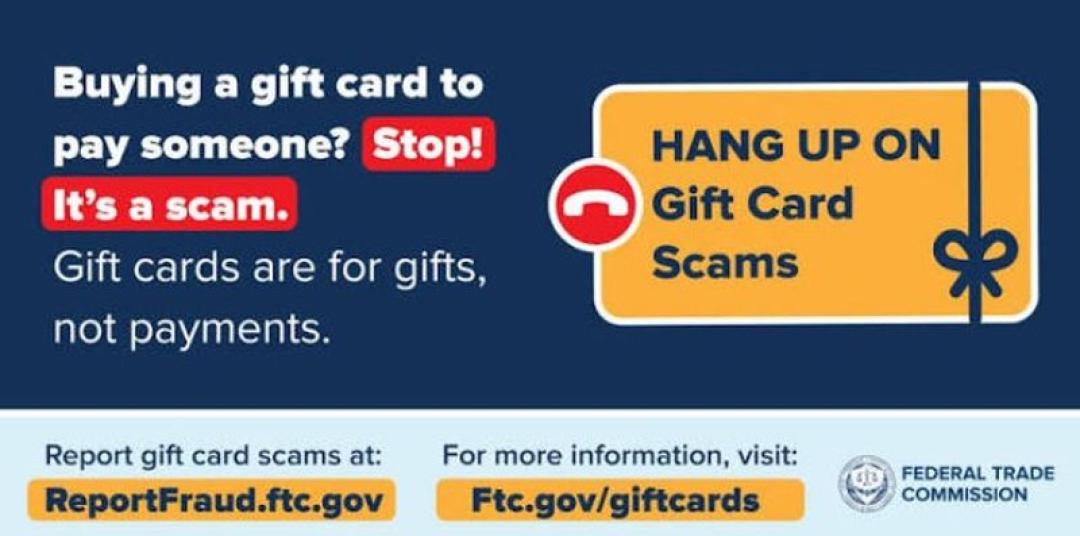
Government agencies won’t tell you the things above, don’t fall for those! (Image Credit: FTC)
Tech support scams often start with a fake warning. You may see a pop-up that says your computer has a virus. You may also get a call from someone who claims to work for Microsoft, Apple, Google, a bank, or an antivirus company.
The scammer may say your account is at risk. They may ask you to pay for “protection,” “software renewal,” “account recovery,” or “security service” with a gift card.
Real tech support teams do not fix devices through gift card payments. If a support agent asks for a gift card, close the page or end the call.
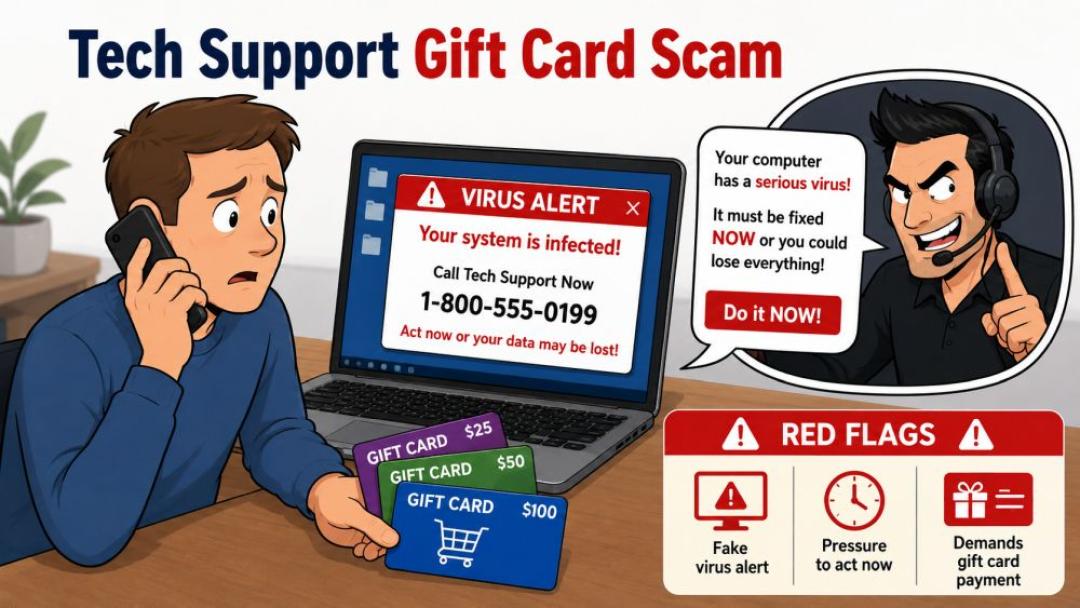
Your PC isn’t in trouble, and you don’t need a scammer’s gift card!
Marketplace scams usually target people who want a good deal.
A seller may offer a phone, game console, ticket, pet, rental room, car part, or gaming item at a low price. Then they ask for a gift card as a “deposit,” “delivery fee,” “reservation payment,” or “proof that you are serious.”
Once you send the code, the seller disappears. In many cases, the product never existed.
Use payment methods with buyer protection. Avoid sellers who push you away from the platform or ask for gift cards.
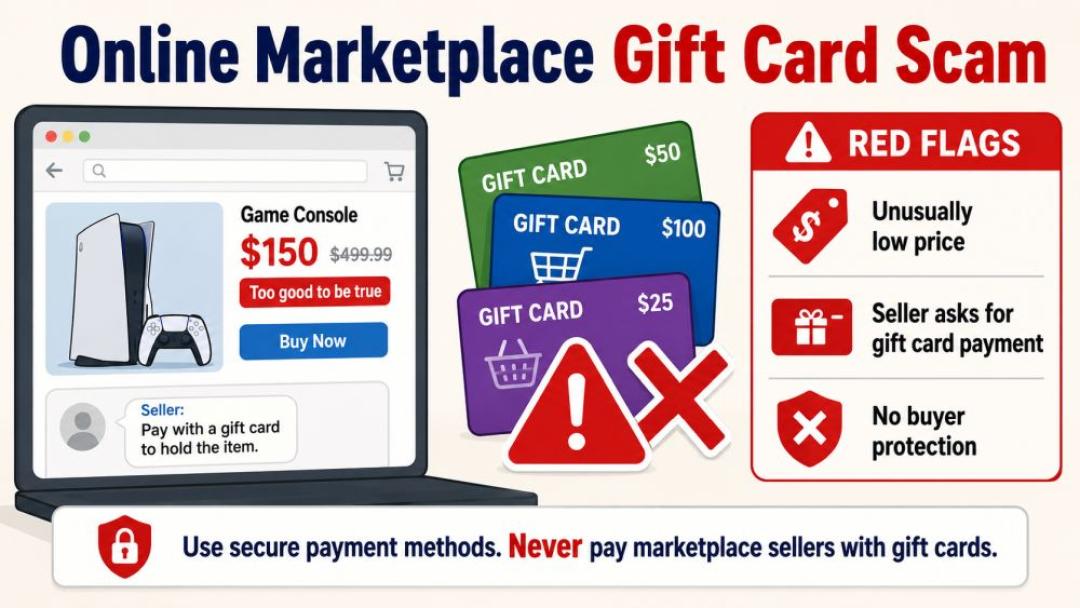
If the deal is too good to be true, it most likely is!
Romance scams often take more time. The person first builds trust. They send friendly messages, personal stories, and emotional details. Then they ask for help.
They may say:
A real relationship does not need repeated gift card payments. If someone you met online asks for gift cards, treat it as a serious warning sign
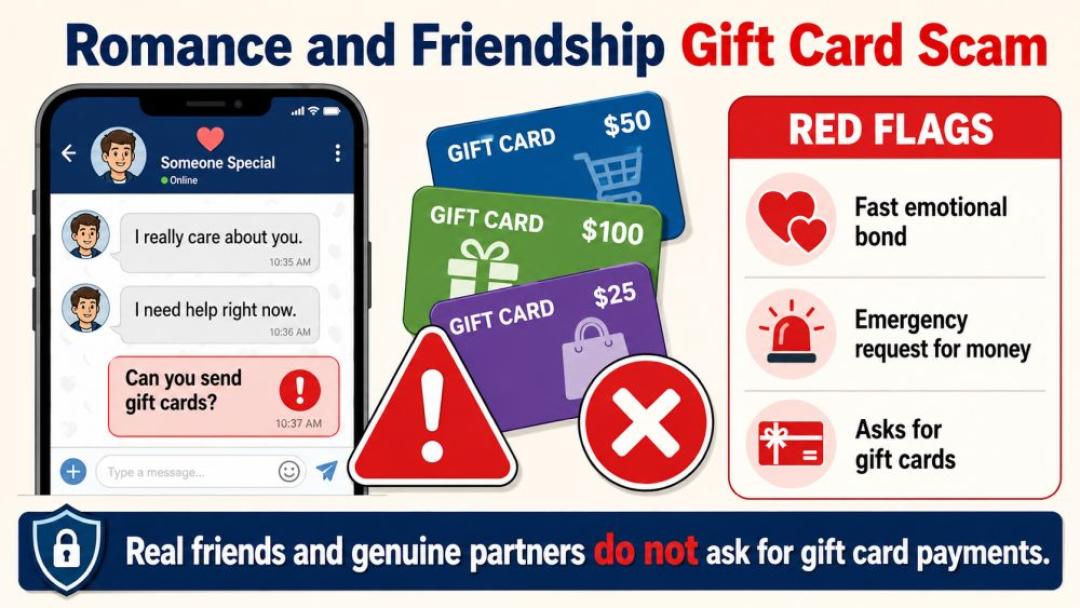
Romance scams usually follow the same pattern, and gift cards are also a part of them.
Fake eGift card emails can steal more than the gift card balance.
The email may say you received or won an electronic gift card. The link may take you to a fake claim page. That page may ask for your email password, phone number, address, payment card, or account login.
This is textbook phishing. Phishing means a fake message or website tries to steal sensitive information.
If an eGift card email looks strange, do not click the link. Go to the brand’s official website directly.
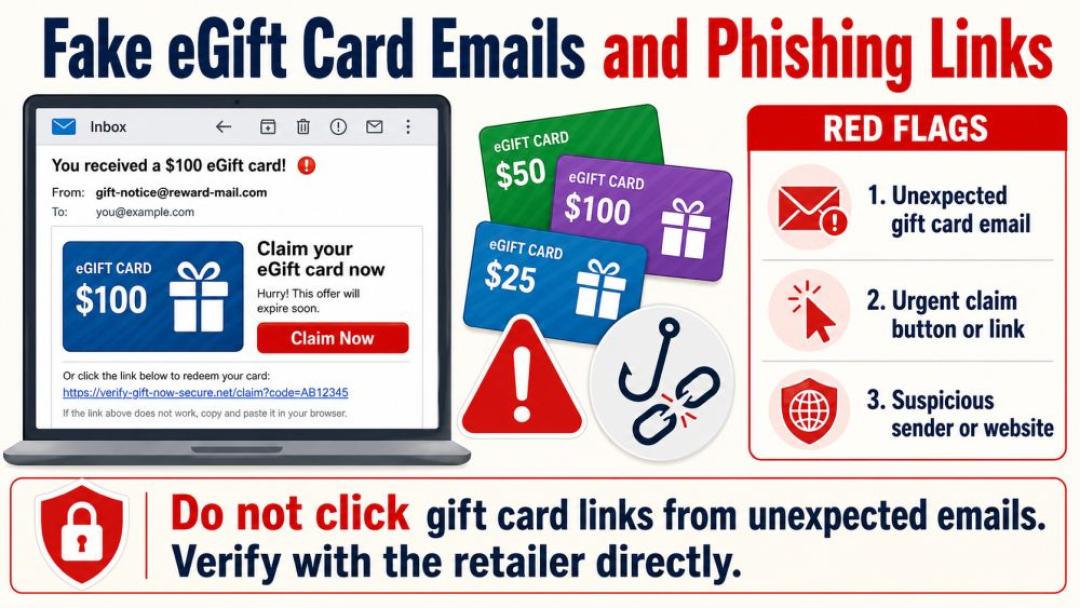
If you receive an email similar to this pattern, just don’t click on the links!
Most gift card scams show at least one clear warning sign.
Watch for these red flags:
The strongest warning sign is simple. Someone asks you to use a gift card as payment.
You can reduce the risk before you pay at the counter.
Use this checklist:
If the gift card request came from a website, check the domain before you act. ScamAdviser’s Trust Score reviews different website signals and explains why a website may look risky.
This can help you spot a fake shop, fake prize page, or suspicious payment request before you enter personal details.
Act fast. Do not argue with the scammer. Do not buy another card. They love making it feel like it didn’t work, so that they can make you redeem another one. Don’t fall for that, it is the most classic trick in the book.
You may still be able to stop the loss.
Do this:
Contact the gift card issuer immediately and say something along the lines of:
“I was tricked into sharing this gift card code. Can you check the balance and freeze the card?”
Then do this:
Speed matters. If the balance has not been used, the issuer may still be able to freeze it.
You may get money back only if the gift card issuer can stop the balance before the scammer uses it.
Gift cards do not work like credit cards. Once someone redeems the code, the issuer may not recover the money. This is why you should contact the gift card company first.
Be careful after the first loss. Recovery scams often target victims again. A fake recovery agent may say they can get your money back for a fee.
Do not pay anyone who promises recovery through another gift card, wire transfer, crypto payment, or upfront fee.
Use one simple rule first: never pay a stranger, company, agency, or online seller with a gift card.
Then use these habits:
A short pause can stop the scam. If someone rushes you, slow down and check.
Why do scammers ask for gift cards?
Scammers ask for gift cards because they can use the code quickly and the payment is hard to reverse.
Can I get money back after a gift card scam?
You may get money back only if the gift card issuer can freeze the balance before the scammer uses it.
What should I do if I gave someone a gift card code?
Contact the gift card issuer immediately, keep the card and receipt, and report the scam.
Do government agencies accept gift cards as payment?
No, government agencies do not accept gift cards for taxes, fines, bail, or official fees.
Is it safe to pay an online seller with a gift card?
No, gift cards are not safe for payments to online sellers because they offer little protection after you share the code.
How can I tell if a gift card was tampered with?
Look for scratched PIN covers, loose packaging, glue marks, resealed areas, or barcode stickers over the original barcode.
Can a fake website steal gift card information?
Yes, fake websites can collect gift card codes, personal details, login information, and payment data.
Where can I report a gift card scam?
Report it to the gift card issuer, the platform where it started, local authorities when needed, and ScamAdviser.
