
GR
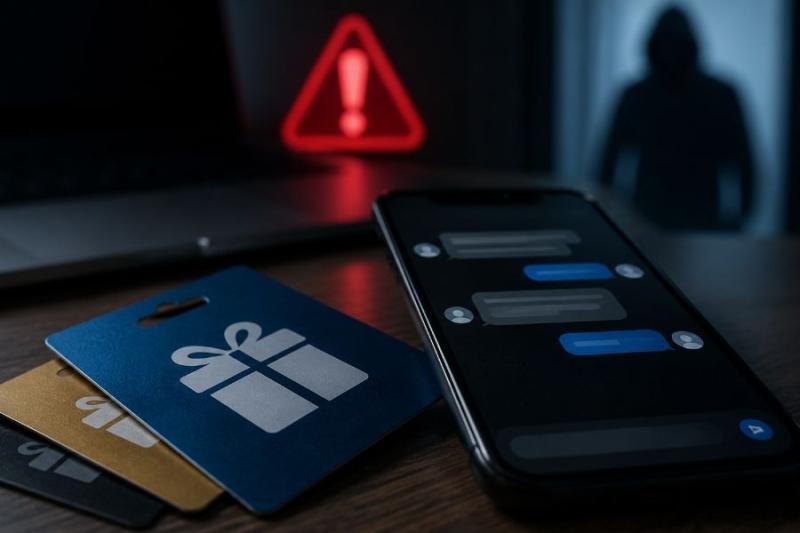
Μια δωροκάρτα προορίζεται να χρησιμοποιηθεί σε αντάλλαγμα για αγαθά ή υπηρεσίες που προσφέρονται από τον εκδότη. Δεν θα πρέπει να τη θεωρείτε ως κανονική μορφή πληρωμής. Κάθε πωλητής που επιμένει στην πληρωμή με δωροκάρτα είναι πιθανότατα απατεώνας.
Οι απατεώνες λατρεύουν τις δωροκάρτες επειδή ΔΕΝ είναι ανιχνεύσιμες. Αυτό θα πρέπει να σας δώσει μια ιδέα για το γιατί οι απατεώνες επενδύουν χρόνο και ενέργεια σε αυτές τις απάτες εδώ.
Σας έχουν ζητήσει ποτέ να πληρώσετε για κάποιο αγαθό ή υπηρεσία από μια νόμιμη επιχείρηση; Η πληρωμή για πράγματα μέσω δωροκάρτας ευδοκιμεί σε διαδικτυακές πλατφόρμες όπου οι πωλητές είναι άτομα που δεν μπορείτε να συναντήσετε.
ΗWalmart, το iTunes, το eBay και η Google έχουν αρκετούς λιανοπωλητές που πωλούν τις δωροκάρτες τους.
Οι απατεώνες θα επικοινωνήσουν μαζί σας ισχυριζόμενοι ότι είναι τεχνική υποστήριξη, πράκτορες της Εφορίας, υπάλληλος της λοταρίας ή οποιοσδήποτε άλλος αναγνωρισμένος υπάλληλος. Ισχυρίζονται ότι οφείλετε ένα χρέος το οποίο θα πρέπει να πληρώσετε με δωροκάρτες. Στη συνέχεια, σας ζητούν να στείλετε τον κωδικό που βρίσκεται στο πίσω μέρος της κάρτας.
Κάποιοι θα τηλεφωνήσουν και θα ισχυριστούν ότι έχετε ήδη χρησιμοποιήσει μια υπηρεσία. Και θα πρέπει να πληρώσετε μέσω δωροκάρτας. Κλείστε το τηλέφωνο και αγνοήστε τέτοιες κλήσεις στο μέλλον.
Άλλοι απατεώνες που κάνουν ηλεκτρονικές αγορές προσφέρουν αγαθά στο διαδίκτυο σε πολύ καλές τιμές ευκαιρίας και επιμένουν ότι πρέπει να πληρώσετε μέσω δωροκάρτας. Μόλις τους δώσετε τον κωδικό της δωροκάρτας, σιωπούν και τα χρήματα στην κάρτα εξαφανίζονται!
Έχουν επίσης υπάρξει απάτες με φιλανθρωπικές οργανώσεις που συνδέονται με δωροκάρτες. Απατεώνες που παριστάνουν τους κληρικούς που συγκεντρώνουν χρήματα για έναν αξιόλογο σκοπό ή για κάποιον πιστό που έχει ανάγκη. Τηλεφωνούν, στέλνουν μηνύματα ή στέλνουν email στους πιστούς και τους ζητούν να αγοράσουν δωροκάρτες και στη συνέχεια μοιράζονται τους αριθμούς τους.
Η κυβέρνηση και οι εταιρείες που αξίζουν τον κόπο δεν ζητούν πληρωμή μέσω δωροκάρτας. Ζητούν πληρωμή σε πραγματικά χρήματα.
Κάποιοι απατεώνες είναι τόσο τολμηροί ώστε να επισκέπτονται καταστήματα που πωλούν δωροκάρτες και αντί να αγοράσουν, ξύνουν για να αποκαλύψουν το PIN, να βγάλουν φωτογραφία και να ξαναβάλουν το sicker. Μια τέτοια κάρτα δεν θα φαίνεται κατεστραμμένη στο αδιάκριτο μάτι σας. Θα συνειδητοποιήσετε ότι είναι πλαστή μόνο αφού την αγοράσετε και προσπαθήσετε να τη χρησιμοποιήσετε!
Ο απατεώνας έκλεψε τον κωδικό PIN αλλά άφησε την κάρτα. Μόνο το PIN είναι απαραίτητο για τις ανταλλαγές.
Είναι σύνηθες φαινόμενο οι απατεώνες να παριστάνουν τους γνήσιους εκπροσώπους της εταιρείας. Μια απάτη με δωροκάρτα Walmart έδειξε αγοραστές να δολώνονται μέσω ενός ηλεκτρονικού ταχυδρομείου. "Πάρτε μέρος σε μια έρευνα και μπορείτε να κερδίσετε μια δωροκάρτα 500 δολαρίων", ανέφερε το μήνυμα ηλεκτρονικού ταχυδρομείου.
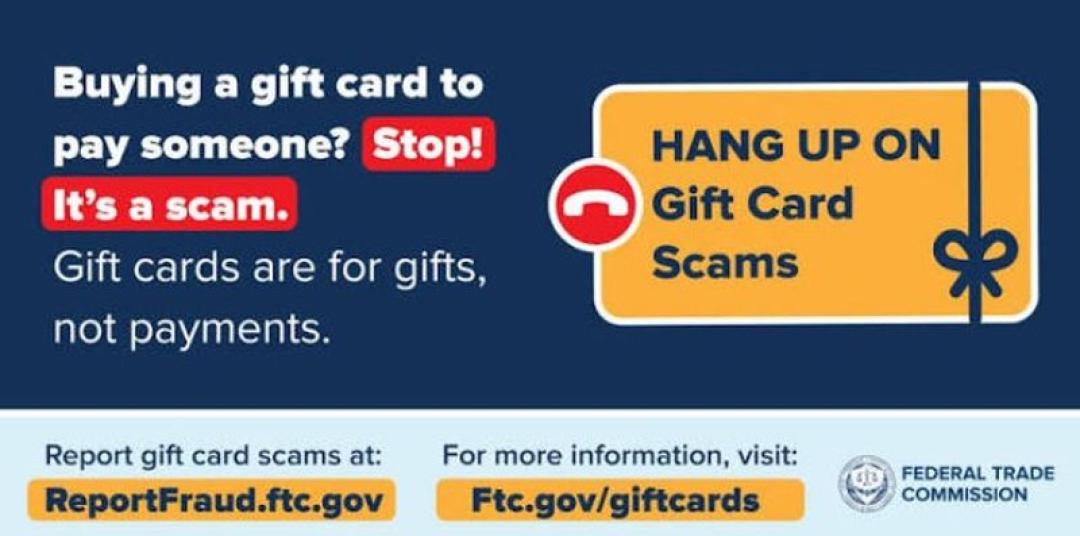
Government agencies won’t tell you the things above, don’t fall for those! (Image Credit: FTC)
Tech support scams often start with a fake warning. You may see a pop-up that says your computer has a virus. You may also get a call from someone who claims to work for Microsoft, Apple, Google, a bank, or an antivirus company.
The scammer may say your account is at risk. They may ask you to pay for “protection,” “software renewal,” “account recovery,” or “security service” with a gift card.
Real tech support teams do not fix devices through gift card payments. If a support agent asks for a gift card, close the page or end the call.
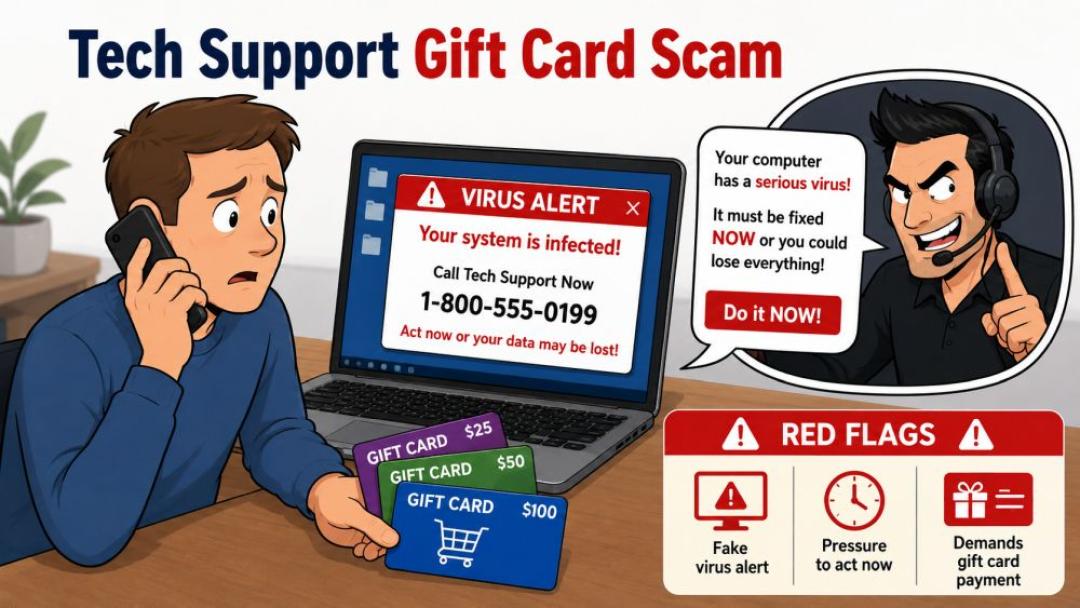
Your PC isn’t in trouble, and you don’t need a scammer’s gift card!
Marketplace scams usually target people who want a good deal.
A seller may offer a phone, game console, ticket, pet, rental room, car part, or gaming item at a low price. Then they ask for a gift card as a “deposit,” “delivery fee,” “reservation payment,” or “proof that you are serious.”
Once you send the code, the seller disappears. In many cases, the product never existed.
Use payment methods with buyer protection. Avoid sellers who push you away from the platform or ask for gift cards.
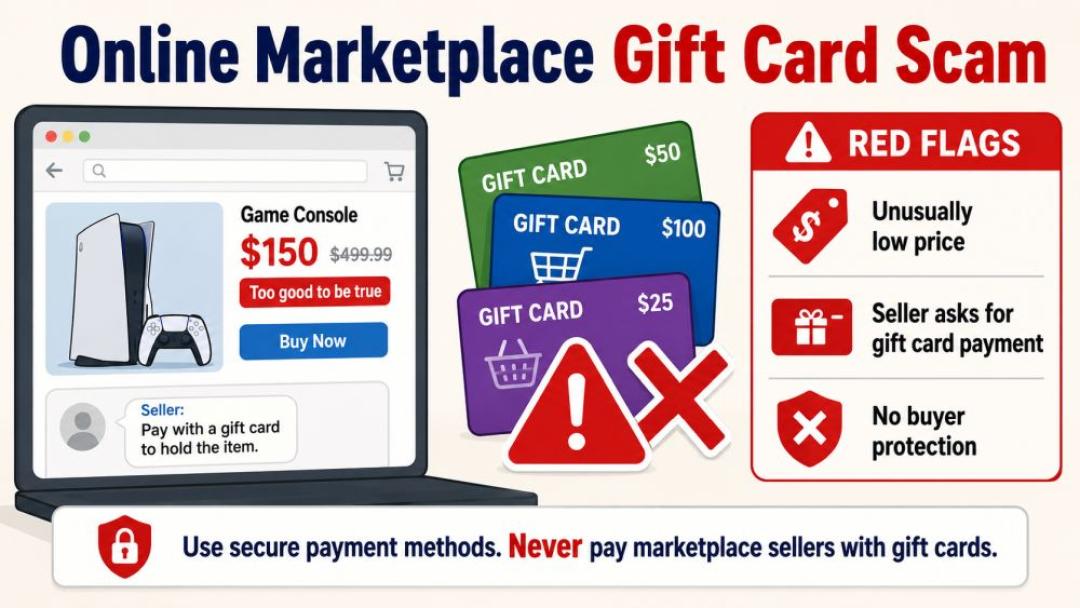
If the deal is too good to be true, it most likely is!
Romance scams often take more time. The person first builds trust. They send friendly messages, personal stories, and emotional details. Then they ask for help.
They may say:
A real relationship does not need repeated gift card payments. If someone you met online asks for gift cards, treat it as a serious warning sign
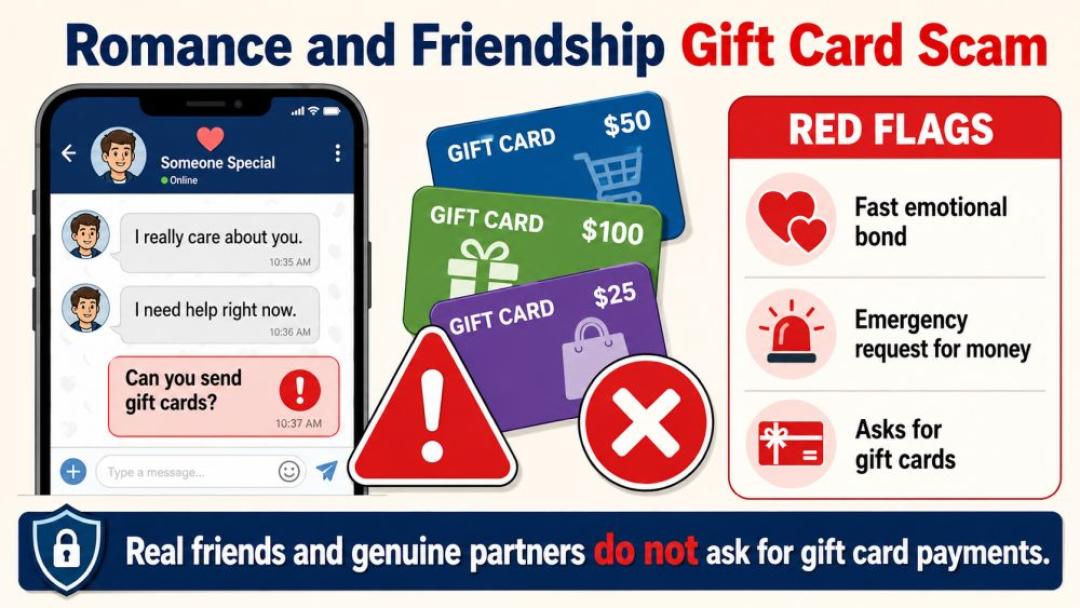
Romance scams usually follow the same pattern, and gift cards are also a part of them.
Fake eGift card emails can steal more than the gift card balance.
The email may say you received or won an electronic gift card. The link may take you to a fake claim page. That page may ask for your email password, phone number, address, payment card, or account login.
This is textbook phishing. Phishing means a fake message or website tries to steal sensitive information.
If an eGift card email looks strange, do not click the link. Go to the brand’s official website directly.
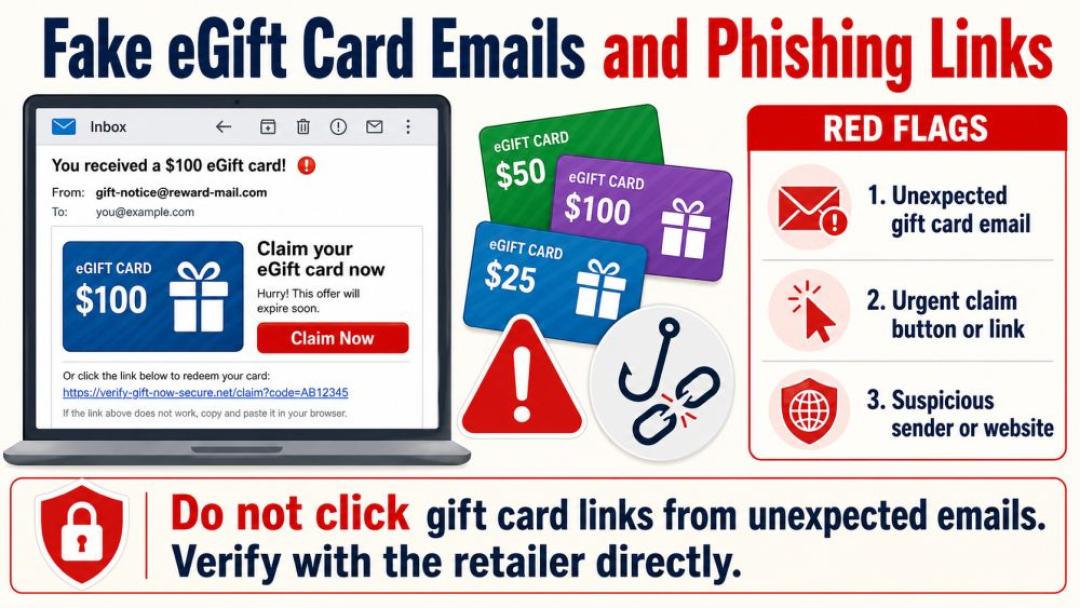
If you receive an email similar to this pattern, just don’t click on the links!
Most gift card scams show at least one clear warning sign.
Watch for these red flags:
The strongest warning sign is simple. Someone asks you to use a gift card as payment.
You can reduce the risk before you pay at the counter.
Use this checklist:
If the gift card request came from a website, check the domain before you act. ScamAdviser’s Trust Score reviews different website signals and explains why a website may look risky.
This can help you spot a fake shop, fake prize page, or suspicious payment request before you enter personal details.
Act fast. Do not argue with the scammer. Do not buy another card. They love making it feel like it didn’t work, so that they can make you redeem another one. Don’t fall for that, it is the most classic trick in the book.
You may still be able to stop the loss.
Do this:
Contact the gift card issuer immediately and say something along the lines of:
“I was tricked into sharing this gift card code. Can you check the balance and freeze the card?”
Then do this:
Speed matters. If the balance has not been used, the issuer may still be able to freeze it.
You may get money back only if the gift card issuer can stop the balance before the scammer uses it.
Gift cards do not work like credit cards. Once someone redeems the code, the issuer may not recover the money. This is why you should contact the gift card company first.
Be careful after the first loss. Recovery scams often target victims again. A fake recovery agent may say they can get your money back for a fee.
Do not pay anyone who promises recovery through another gift card, wire transfer, crypto payment, or upfront fee.
Use one simple rule first: never pay a stranger, company, agency, or online seller with a gift card.
Then use these habits:
A short pause can stop the scam. If someone rushes you, slow down and check.
Why do scammers ask for gift cards?
Scammers ask for gift cards because they can use the code quickly and the payment is hard to reverse.
Can I get money back after a gift card scam?
You may get money back only if the gift card issuer can freeze the balance before the scammer uses it.
What should I do if I gave someone a gift card code?
Contact the gift card issuer immediately, keep the card and receipt, and report the scam.
Do government agencies accept gift cards as payment?
No, government agencies do not accept gift cards for taxes, fines, bail, or official fees.
Is it safe to pay an online seller with a gift card?
No, gift cards are not safe for payments to online sellers because they offer little protection after you share the code.
How can I tell if a gift card was tampered with?
Look for scratched PIN covers, loose packaging, glue marks, resealed areas, or barcode stickers over the original barcode.
Can a fake website steal gift card information?
Yes, fake websites can collect gift card codes, personal details, login information, and payment data.
Where can I report a gift card scam?
Report it to the gift card issuer, the platform where it started, local authorities when needed, and ScamAdviser.
