
EN

It may not receive as much mainstream attention as Pornhub, but Eporner remains one of the internet’s most visited free adult streaming platforms. Millions of users visit the site each month looking for high-definition content. However, as privacy laws tighten and online scams evolve in 2026, many users are asking a simple question before pressing play: is Eporner actually safe?
Our analysis shows that Eporner is not a scam website itself, but it does expose users to certain risks — mainly through advertising, tracking, and fake verification traps.
Eporner.com has operated for more than a decade, which usually signals legitimacy. Scam websites rarely survive that long. The platform offers high-quality uploads and a smooth viewing experience, helping it maintain consistent traffic over the years.
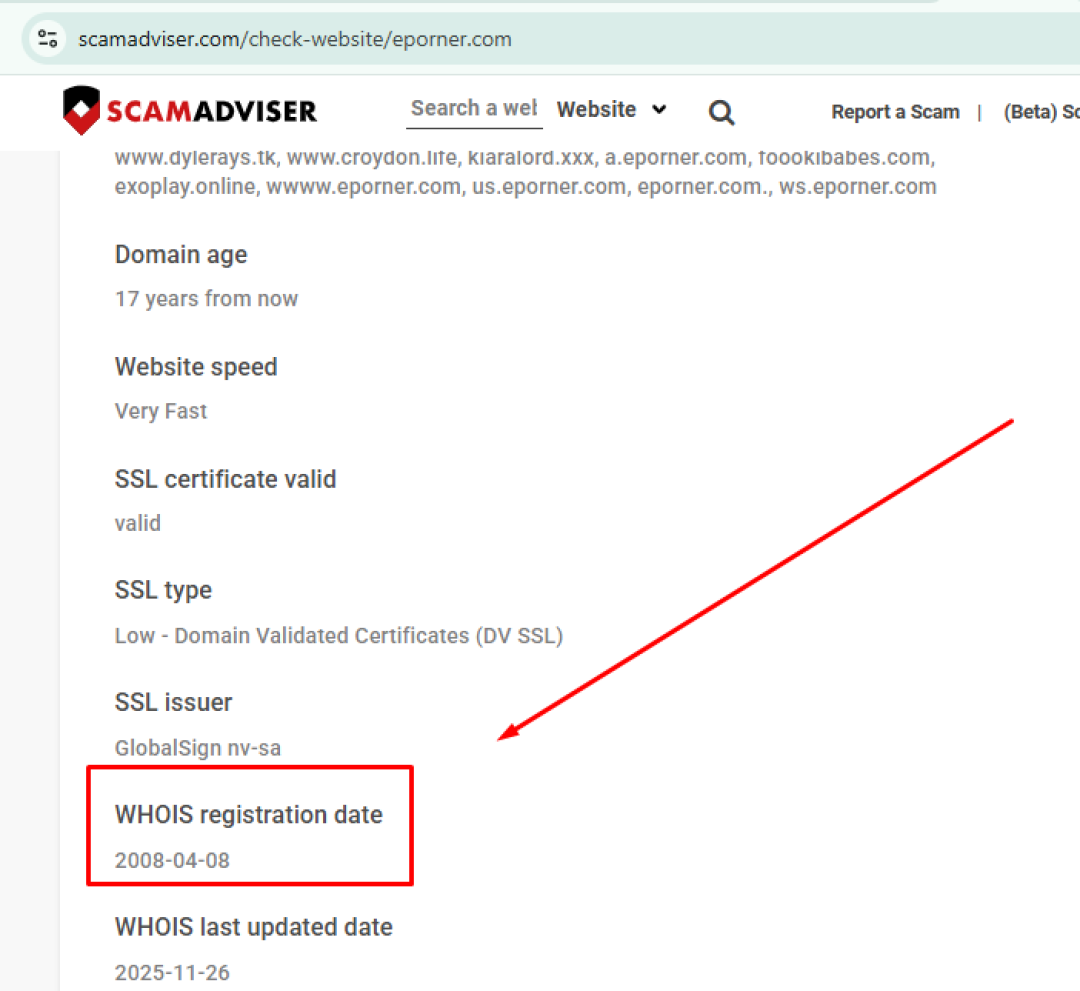
That said, longevity does not automatically equal safety. Because much of the content and advertising comes from third parties, users can still encounter misleading links or aggressive promotions. Like many free platforms, the biggest risks are not the videos but the ecosystem surrounding them.
New age-verification laws in several regions have introduced a new layer of risk. Users may now see prompts asking them to confirm their age through external services.
While legitimate verification systems exist, scammers increasingly copy these pages. Fake pop-ups may request credit card details or sensitive personal data under the claim that you must “prove you’re 18.”
Free streaming sites should never require financial information just for access. If a verification window asks for payment details or unrelated personal data, it is likely a scam attempt and should be closed immediately.
The main danger on Eporner comes from advertising networks rather than the platform itself. Since mainstream advertisers avoid adult websites, these platforms rely on alternative ad providers that can be more aggressive or poorly regulated.
Users may experience redirects triggered by clicking the play button, ads promoting suspicious software or browser extensions, or prompts asking permission to send notifications. Accepting notifications can lead to ongoing spam alerts promoting scams or misleading downloads even after leaving the site.
These tactics rely on tricking users into clicking rather than directly infecting devices.
Simply streaming a video is unlikely to infect your device. Modern browsers isolate video playback to prevent malicious code from spreading.
Problems usually occur when users download something suggested by a pop-up, such as a “video player update” or special viewing software. This year, no additional software is required to watch videos in a browser. Any download request should be treated with caution.
Like most high-traffic websites, Eporner uses cookies and trackers to analyze viewing behavior and serve targeted ads. Private browsing modes reduce saved history on your device but do not completely stop tracking.
Users concerned about privacy should understand that adult browsing data can still contribute to advertising profiles unless additional privacy tools are used.
Eporner is a legitimate streaming platform, but it is not risk-free. The primary concerns come from aggressive ads, fake verification prompts, and tracking technologies rather than the videos themselves.
Users who avoid downloads, ignore suspicious pop-ups, and remain cautious with permissions can significantly reduce potential risks. In short, the platform works as intended, but safe browsing habits are essential.
FAQ
Is Eporner safe to use?
Yes, the site itself is established, but third-party ads may expose users to redirects or misleading pop-ups.
Do you need to pay to watch Eporner videos?
No. The platform is free. Payment requests claiming to unlock access are typically scams.
Can Eporner track what you watch?
Yes. Like most websites, it uses cookies and analytics tools to monitor viewing behavior.
Why does antivirus software warn about Eporner?
Security programs often flag advertising domains connected to adult sites, not the video content itself.
This article has been written by a scam fighter volunteer. If you believe the article above contains inaccuracies or needs to include relevant information, please contact ScamAdviser.com using this form.
