
EN
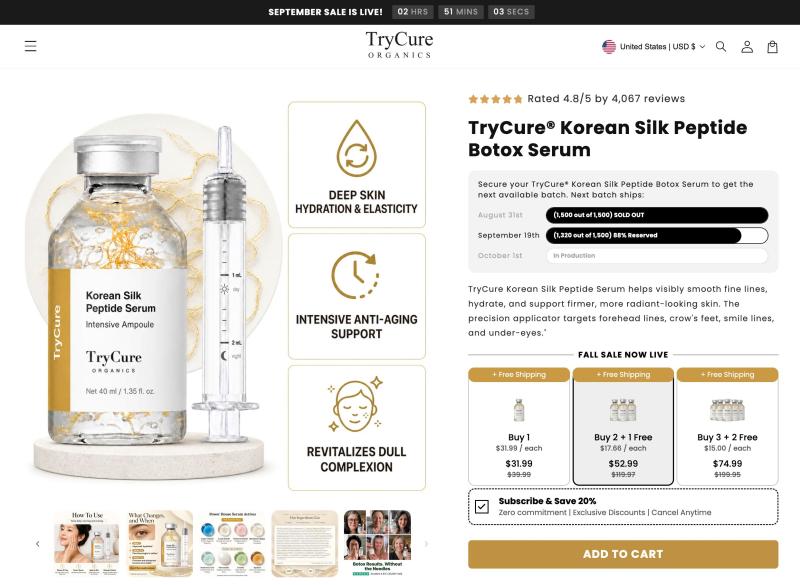
An online evaluation of the trending TryCure Korean Silk Peptide Serum (TryCure Korean Silk Peptide Botox Serum) suggests it might function as a hydrating cosmetic treatment, but its commercial presentation appears to rely on highly strategic marketing frameworks. While the TryCure brand seems to operate a functioning e-commerce store that appears to ship physical inventory to buyers, its branding methods appear to walk a narrow line between standard cosmetic enhancement and medical style positioning.
Consumers considering a purchase could benefit from looking past the viral social media advertisements to examine the formulation and business practices beneath the surface.
The TryCure Korean Silk Peptide Botox Serum appears to be marketed as a topical alternative to clinical dermatology procedures, utilizing a needle free syringe applicator to dispense a gold threaded fluid. Chemically, it seems to resemble a standard, concentrated cosmetic fluid rather than a medical solution.
Several structural observations on their digital storefront suggest the possible use of high pressure sales tactics common among modern online only retailers:
The golden thread aesthetic and silk peptide branding seem to closely mirror viral trends popularized by SUNGBOON EDITOR, an established South Korean skincare manufacturer known for its Deep Collagen Silk EGF Peptide Intensive Ampoule. TryCure appears to utilize a Western business registration while adopting many of SUNGBOON EDITOR's signature K-Beauty design elements, such as the visible dissolving gold threads and the syringe style dosing tool. Furthermore, the formulation claims highlighted by TryCure regarding a 30-peptide complex appear to mirror the original Korean brand's marketing concepts, potentially to appeal to global skincare trends.
The storefront frequently displays real time countdown clocks, batch fulfillment percentages (such as "88% Reserved"), and warning banners indicating that stock could be nearly gone. These elements appear designed to encourage quick, impulsive checkouts before a consumer can consult external sources.
Packaging a topical fluid in a medical style vial with a graduated syringe like tool might create an immediate subconscious association with professional-grade injections, even though the product appears to function entirely on the surface layer of the skin.
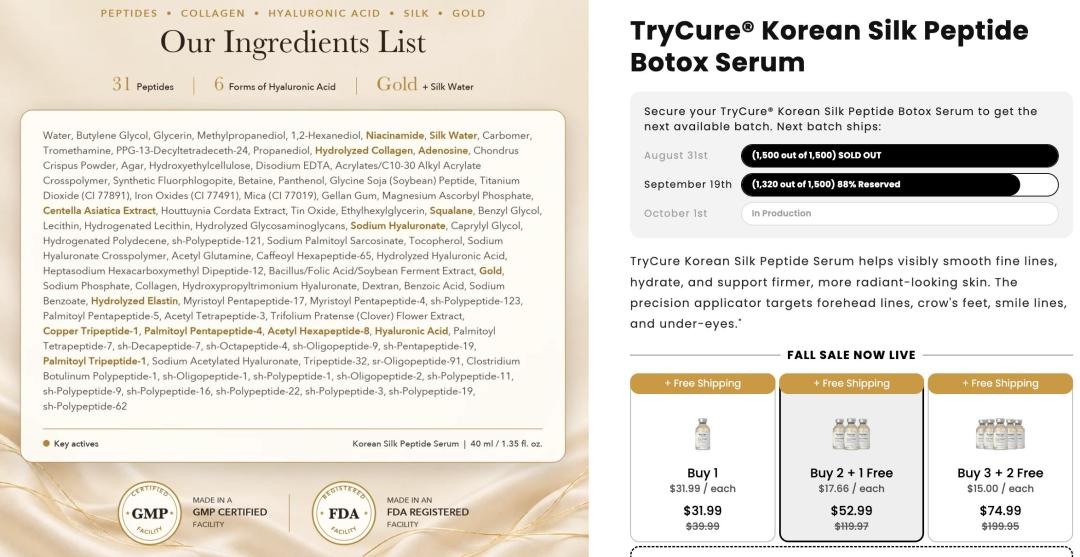
An analysis of the ingredient list seems to reveal a split between highly reliable cosmetic humectants and experimental trace additives.
The foundation of the formula appears to rely on a collection of widely accepted cosmetic agents:
Deep Surface Hydration from TryCure Korean Silk Peptide Serum:
High concentrations of Glycerin, Hyaluronic Acid, and Butylene Glycol might serve as powerful humectants. These ingredients could pull moisture into the upper layers of the skin, which may create a temporary plumping effect that might soften the appearance of dry texture lines.
Barrier Enhancement with TryCure Korean Silk Peptide Botox Serum:
The prominent inclusion of Niacinamide may help support natural skin barrier function, improve the appearance of uneven skin tone, and perhaps refine pore texture over time.
Optical Brightening:
The formula utilizes mineral pigments like Mica and Titanium Dioxide. When applied, these micro shimmers might disperse across the face, reflecting light to potentially create a visual glow and an optical blurring effect on fine lines.
Despite the expansive ingredient list, the biological capabilities of a topical cosmetic seem to remain strictly limited:
The Botox Paradox of TryCure Korean Silk Peptide Serum:
The marketing prominently leverages the word Botox, but over the counter peptide complexes may not replicate the deep muscle-relaxing mechanism of a localized neurotoxin injection. Any tightening sensation felt upon application seems to be caused by film-forming polymers drying on the surface, which could wash away with water.
Trace-Level Additives:
The brand boasts a "30-Peptide Complex" along with various growth-factor mimics (sh-Polypeptides). In global cosmetic standards, these complex proteins seem to be almost universally added in microscopic trace amounts near the very bottom of the ingredient registry, meaning their long-term structural impact on deep collagen rebuilding might be negligible.
Potential buyers may benefit from reviewing the specific commercial terms outlined on the storefront, as the publicized "60-Day Money Back Guarantee" operates under distinct procedural conditions detailed within the formal policy text:
The document states that the guarantee is structured around a multi-week application course. According to the text, the company requests that consumers use the product consistently as directed for at least 40 days. As written, refund requests submitted prior to day 40 or after day 60 following the delivery date appear to be categorized as ineligible under these specific framework terms.
The policy documentation indicates that the responsibility for return shipping costs rests with the consumer. Additionally, the text notes that original outbound shipping charges, handling fees, and potential customs charges are non-refundable, meaning a buyer could incur certain expenses during the return process.
For consumers located within the European Union or the United Kingdom, the policy references a statutory 14-day cancellation window. However, the terms also include a clause stating that items sealed for health protection or hygiene reasons, specifically naming serums and topicals, may not be eligible for return once the product seal has been broken.
Additionally, the displaying of third-party facility credentials like "GMP Certified" or "FDA Registered" simply indicates that the manufacturing plant might meet standard safety and cleanliness regulations. It does not imply that regulatory bodies have audited, tested, or approved the specific cosmetic anti-aging claims highlighted by the brand.
TryCure Korean Silk Peptide Serum (TryCure Korean Silk Peptide Botox Serum) appears to distribute a tangible cosmetic fluid containing standard raw ingredients that are widely recognized in dermatology for basic surface hydration. However, it may not be the premium, non-invasive medical breakthrough depicted in its promotional videos. Also, there seem to be no independent, peer-reviewed clinical trials published on TryCure’s completed proprietary formula to validate its advanced topical anti-aging claims.
When navigating online-only storefronts, consumers may benefit from evaluating purchases based on verified raw ingredients, formal return policy conditions, and personal skincare budgets. Additionally, utilizing robust, protected payment methods, such as credit cards with strong fraud protection or verified third-party payment processors, can provide buyers with an extra layer of transactional security and dispute options for any online purchase.
This objective review is for educational, informational, and critical commentary purposes only. The analysis and observations are based on an independent evaluation of publicly available marketing materials, product ingredient listings, official digital store policies, and third-party consumer feedback at the time of writing.
This content provides a neutral analysis of documented retail frameworks and does not make definitive accusations regarding the legality or operational intent of the business entities involved. It neither promotes nor condemns the product, noting the presence of online storefronts without endorsing or criticizing their commercial practices. Individual cosmetic experiences may vary, and consumers are encouraged to autonomously evaluate marketing claims, raw ingredients, and digital transparency before purchasing.
All product names, logos, and trademarks (including "TryCure") are the property of their respective owners and are used here under fair use guidelines exclusively for descriptive and identification purposes. This commentary does not constitute professional dermatological or medical advice, diagnosis, or treatment. Always consult a licensed healthcare professional or dermatologist before introducing any new topical cosmetic or skincare products to your routine.
This article has been written by a Scam Fighter Contributor, De-Reviews.com Team. If you believe the article above contains inaccuracies or needs to include relevant information, please contact ScamAdviser.com using this form.
De-Reviews.com Team is a group of scam researchers, editors, and online safety advocates dedicated to exposing online fraud and helping consumers stay safe online. The team has been investigating scams, fraudulent websites, phishing campaigns, and other online threats since 2014. Read the Full Author Profile.
