
EN
A recovery scam is one of the most dangerous types of fraud targeting people who have already been scammed. These scammers approach victims claiming they can help recover lost money, but in reality, they are the same fraudsters or a new group preying on vulnerable individuals. The goal is to steal even more money from victims who are already emotionally and financially affected by their first loss.
Recovery scams can appear in many online places, including social media posts, comment sections of scam-related articles, private messages, emails, or even chat apps like WhatsApp and Telegram. Scammers often craft messages that look like genuine experiences of past victims, making their claims seem credible. They may even provide an email address or phone number for the supposed “recovery expert”, encouraging victims to reach out.
Unfortunately, these scammers never recover the money. Instead, they exploit victims by requesting upfront payments, personal information, or even remote access to devices. Once the victim complies, the scammers vanish, leaving the victim worse off than before.
Below are examples of the kind of messages used to lure victims:
"Everyone should be careful, it was actually painful when I dicovered i was scammed by PRIMECFDs and Carlosfxtrade with over $125,000 but Mr Alfred Bernard helped me to recover my invested capital with my profit. Feel free to contact him on his private email address: alfredbernard 799 @ gmail . com for assistance."
"I’m posting this review to warn others about cryptO investment scams that are becoming more common online. Scammers often create professional-looking websites and pretend to be financial experts to gain your trust.They will show you fake profits to encourage you to invest more m0ney, but when you try to withdraw your funds they demand additional payments such as taxes, verification fees, or withdrawal charges. If you encounter something like this, stop immediately and do not send more money. Always verify the legitimacy of any investment platform and report suspicious activities to the proper authorities. Good to see a review about this great Hacker Brunoe Quick Hack, If you have been scammed by crypt0 investment, Don’t panic—you’re not alone. Brunoe Quick Hack Thanks to their skills and persistence, I finally recovered my stolen Crypt0 Contact: BrunoeQuickHack (@) GMAIL.COM
WhatsApp +1705-(7842-635)
Stay safe and always do your research before investing online."
NOTE: The information provided in the above examples may be impersonated.
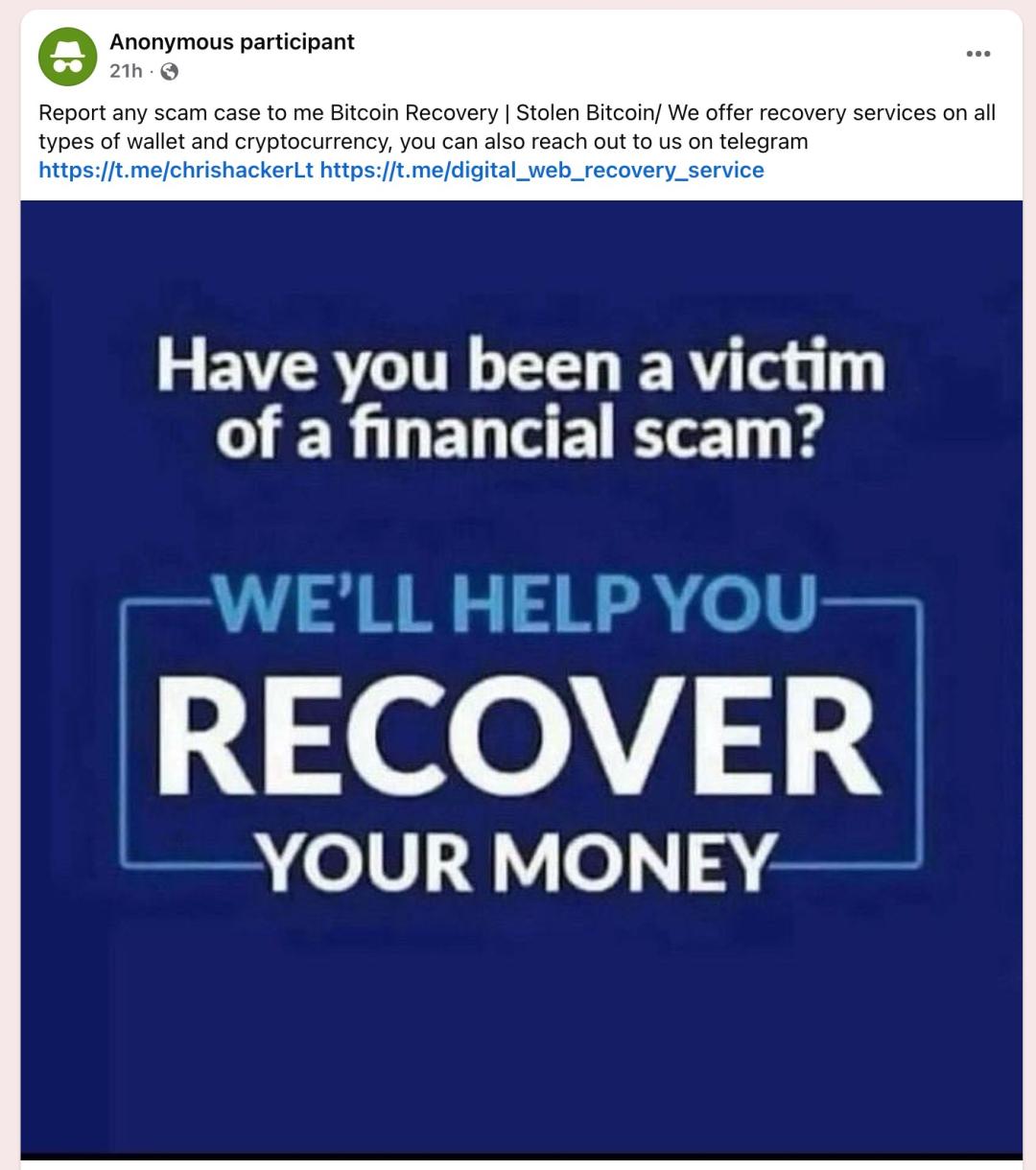
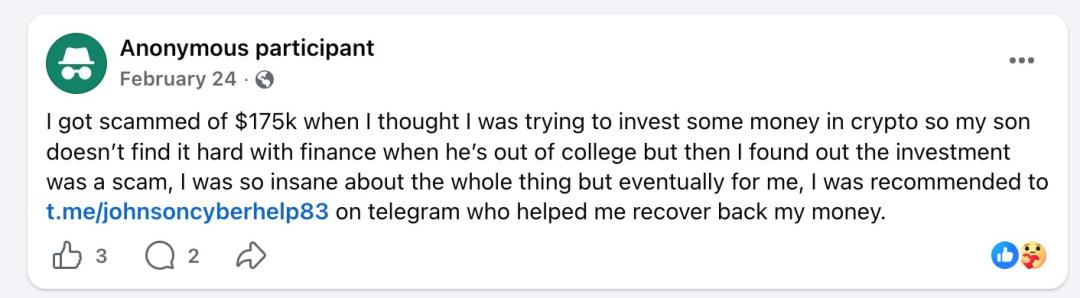
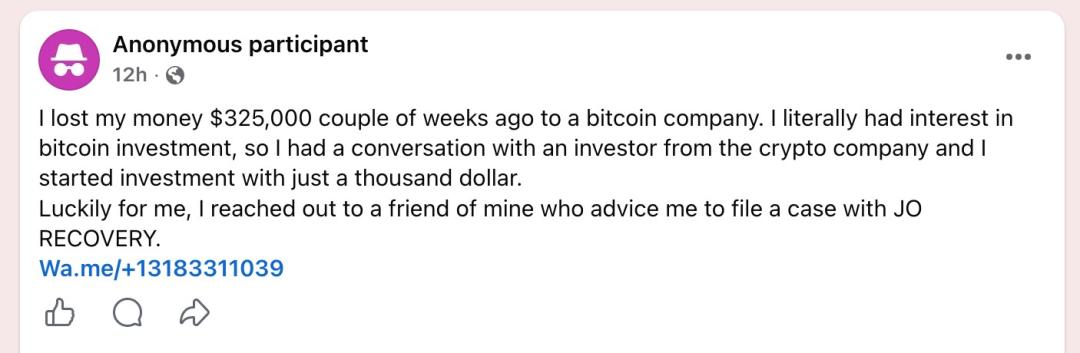
Scammers often use sucker lists, which contain details of people who have already lost money to previous scams. They target these individuals with personalized messages, making the victim feel understood and hopeful. Common tactics include:
In some cases, scammers target cryptocurrency victims with fake wallet addresses or recovery tools, claiming that funds are stuck and require a fee to release. This method ensures that victims never get their money back.
Recovery scams are increasingly common in online spaces where victims of prior scams discuss their experiences. Some of the most common places include:
Scammers strategically position themselves in these spaces to appear trustworthy, often using personal details from victims’ public posts to gain credibility.
Victims should watch out for the following red flags:
Being able to recognize these warning signs is critical to avoid falling victim to a recovery scam.
Preventing recovery scams requires vigilance and careful action. Key steps include:
Recovery scams are especially harmful because they target people who are already vulnerable after being scammed once. These scams rely on hope and trust to extract even more money and personal information. Victims must remain vigilant, question any unsolicited recovery offers, and always verify before taking action.
Remember, if someone promises to recover your lost funds for a fee or asks you to pay before any work is done, it is almost certainly a scam. Awareness, careful verification, and prompt reporting are the most effective defenses against these fraudulent schemes. Protect yourself, stay informed, and do not let scammers take advantage of your previous losses.
Image Source: Pixabay
Disclaimer: This article has been written by a Scam Fighter Contributor. If you believe the article above contains inaccuracies or needs to include relevant information, please contact ScamAdviser.com using this form.
