
EN

You click a video link, and instead of the clip playing, a new tab forces its way open. Before you can close it, another one loads. If you are wondering is Duavn safe, you need to understand what happens behind the scenes.
Duavn.net is an adult streaming platform, but the actual content is secondary to how the site operates. Aggressive redirects are a major warning sign on adult websites, often acting as a delivery mechanism for unwanted software.
In a Nutshell
WHOIS records and ScamAdviser confirm the domain was registered on September 24, 2025. While domain age alone is not definitive proof of a scam, it is a major warning sign, especially since brand-new sites lack a credible history of safe operation. In this context, the recent registration date suggests a calculated strategy often employed by scam networks: rapidly cycling through new domains to avoid detection and security filters.
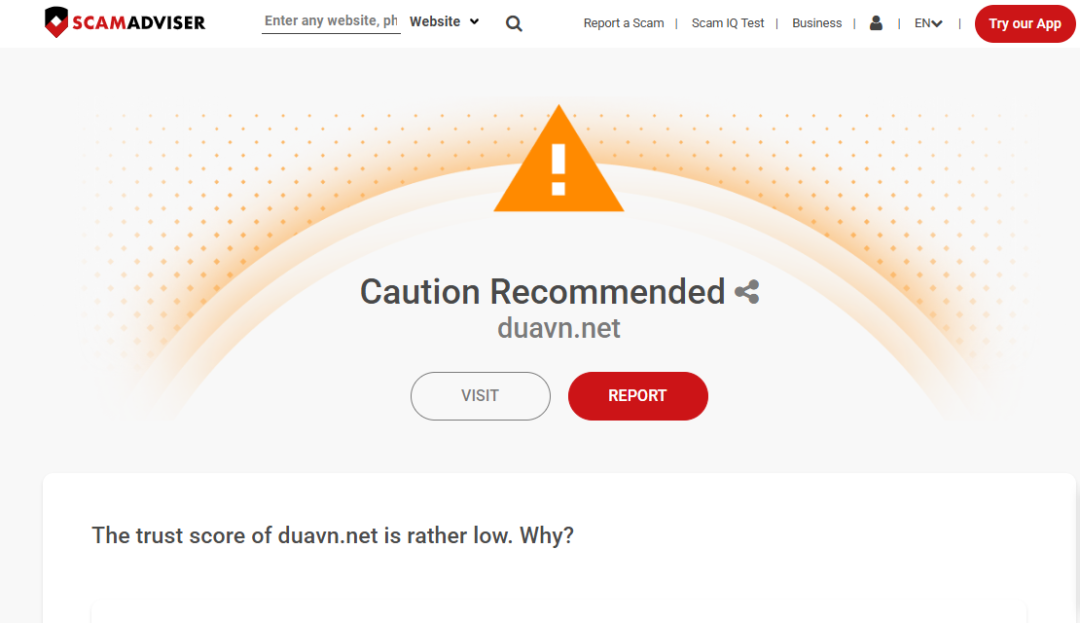
This newness is directly linked to the site's high-risk behavior. A fresh domain allows operators to bypass early reputation checks, enabling the immediate and aggressive deployment of malvertising networks, forced redirects, and browser notification traps mentioned earlier. The combination of a brand-new domain and the site's explicit "You play, you pay" disclaimer suggests a deliberate attempt to maximize short-term, click-based revenue while legally dodging any responsibility for the malware and spyware users might encounter.
The platform aggregates adult video content, but it greets visitors with a very specific warning: "You play, you pay. DưaVN assumes no responsibility for the content on this website."
This wording does two things. First, it admits the site cannot control what loads on your screen. Second, it shifts the blame entirely onto you if a third-party ad infects your device.
Almost every click on this site triggers a redirect. You try to press play, pause, or even close an ad, and your browser suddenly pulls you to a completely different webpage. These redirect chains are intentional.
Malicious ad networks use them to push fake virus alerts, tech support scams, and browser notification traps. You do not even have to download anything intentionally. Simply interacting with a fake "close" button can trigger an unwanted script.
Adult websites using low-tier ad networks are prime targets for malvertising — the practice of hiding malicious code in digital ads. On platforms with this level of redirect spam, you face a high risk of encountering adware and browser hijackers.
Often, a redirect prompts you to update your media player or download a fake APK file to view the video. Clicking "yes" gives spyware direct access to your operating system.
Unknown platforms collect user data without transparency. Every redirect drops tracking scripts into your browser, logging your IP address and browsing habits.
Because the site operators remain hidden, you have no way to know who buys that data. You should never enter personal details, create an account, or input payment information on a site that operates this way.
The evidence points to a high-risk environment. A domain registered just months ago, a disclaimer explicitly dodging responsibility, and a maze of forced redirects create a dangerous browsing experience. The aggressive ads alone make the site a liability for your device.
If you land on a streaming site and the first click hijacks your screen, close the tab immediately. Never grant notification permissions, and absolutely never download a file to watch a video.
When deciding is Duavn worth the risk, the answer is clear. The threat of malware and browser hijacking outweighs the content it hosts. Use established platforms with transparent safety records instead.
They do not care what you watch — they only care what you click.
Disclaimer: This article is based on publicly available signals, WHOIS registration data, and standard cybersecurity observations.
Frequently Asked Questions
Can I get a virus just from visiting Duavn.net?
Yes, malicious redirects can trigger drive-by downloads or push fake alerts that trick you into installing malware.
Why does the site open so many new tabs when I click?
The site uses aggressive ad networks that hijack your clicks to generate revenue through forced traffic.
What does the "You play, you pay" warning actually mean?
The operators use this phrase to deny legal or ethical responsibility if their third-party ads infect your device.
How do I stop the pop-ups if I already clicked "allow"?
You must go into your browser settings, locate site permissions, and manually revoke access for any unknown URLs.
Care to see more interesting articles? Take your pick:
This article has been written by a scam fighter volunteer. If you believe the article above contains inaccuracies or needs to include relevant information, please contact ScamAdviser.com using this form.
Adam Collins is a cybersecurity researcher at ScamAdviser who operates under a pseudonym for privacy and security. With over four years on the digital frontlines, he specialises in translating complex threats into actionable advice. His mission: exposing red flags so you can navigate the web with confidence.
