
EN
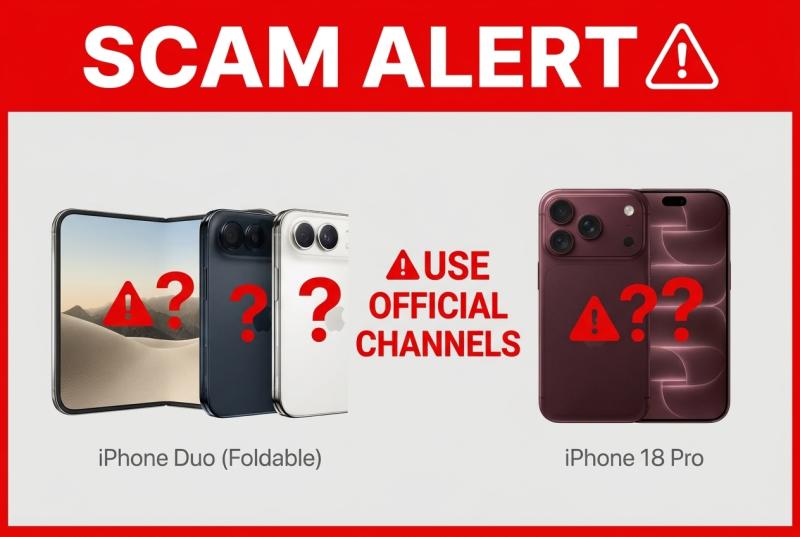
The launch of the iPhone 18 Pro, iPhone 18 Pro Max, and iPhone Duo has created a fresh opportunity for online scammers to target people looking for the latest Apple devices. Fake shopping websites, phishing messages, fake giveaways, early access offers, and counterfeit devices can all be used to steal money or personal information.
Apple opened pre-orders for the iPhone 18 Pro and iPhone 18 Pro Max on September 12, 2026, with availability beginning September 18. The iPhone Duo, Apple's first foldable iPhone, has a later schedule (pre-orders October 16), creating another opportunity for scammers to advertise supposed early access.
The following are some of the major iPhone related scams to watch for now and as the new devices become more widely available.
Several iPhone 18 Pro and iPhone Duo scams are already targeting buyers which include:
One major warning sign is a website advertising a regular or base "iPhone 18" for immediate pre-order or delivery. Apple only announced the 18 Pro, 18 Pro Max, and the folding Duo for this cycle, yet fraudulent websites are already taking deposits for a standard base iPhone 18. This model does not exist yet, making any such listing an absolute trap.
Apple's September announcement covered the iPhone 18 Pro and iPhone 18 Pro Max, while the iPhone Duo is a separate foldable model.
Example:
"iPhone 18 256GB - $1,099 $699 - Pre-order now! Ships immediately."
A fake store could copy Apple's product photographs and create a professional looking checkout page. If a seller is taking deposits for a product that does not match Apple's official lineup or availability information, stop and verify it through Apple directly.
The iPhone Duo is especially attractive to scammers because its release comes after the iPhone 18 Pro models.
Apple introduced iPhone Duo as its first foldable iPhone, and its later availability gives fraudsters time to create supposed "early access," "Apple Beta Tester" "employee stock," or "backdoor warehouse stock" offers.
Example:
"iPhone Duo Early Access - Only 50 Units Available. Pay $199 today to reserve yours before the official launch."
The seller may claim that the device is already sitting in a warehouse or that the buyer has been selected for an exclusive program. The promised phone may never arrive.
Another common tactic is a fake social media giveaway. A TikTok, Instagram, or Facebook advertisement may claim:
"Congratulations! You won an iPhone 18 Pro Max. Pay $10 shipping to receive your prize."
The small fee is the trap. The payment page may collect your card number and other billing information, potentially allowing unauthorized charges.
A similar campaign may ask for a "$10 customs fee," "$3 verification fee," or "$1 registration fee." Do not provide payment details simply because an advertisement claims you won an expensive phone.
Fake stores often use countdown clocks and messages such as:
Fraudulent sellers may also run heavily discounted advertisements on Friday nights and Saturdays. The tactic described in your source information is to exploit periods when bank fraud departments and dispute-processing operations may have limited staffing, potentially giving criminals more time to move stolen funds.
The presence of a countdown timer does not prove a website is fraudulent, but you should never allow artificial urgency to replace verification.
Here are some potential scams and warning signs to watch for:
Once more devices reach the secondhand market, counterfeit phones can become another concern. Counterfeit factories may flood peer-to-peer marketplaces like eBay and Facebook Marketplace with identical looking clones.
A fake iPhone may look almost identical externally but run a modified version of Android designed to imitate iOS. Fake camera lenses and copied packaging can make the device difficult to identify from photographs alone.
Example:
"Brand-new iPhone 18 Pro - $650 - unopened - must sell today."
If the price is dramatically below normal retail value, verify the device carefully before paying.
Secondhand buyers should also watch for stolen or blacklisted devices. A seller may offer a genuine iPhone at an enticingly low prices but after payment the buyer may turn it on and see:
"iPhone Locked to Owner"
The buyer could then be left with a device they cannot properly use. Check the phone's condition and ownership status before completing a secondhand purchase.
A caller may pretend to represent a major telecom provider and offer a "free upgrade promotions" to the iPhone 18 Pro Max.
The real goal may be to collect your account credentials, Social Security number, verification code, or other information and then use your identity to order multiple devices.
If you receive an unexpected upgrade call, hang up and contact the carrier through its official contact information.
The iPhone Duo's foldable design, precision hinge, and dual battery architecture may make repairs more specialized and costly. That could create another opportunity for fraudulent repair services.
Example:
"iPhone Duo screen replacement - only $99. Mail your phone today!"
Unverified third party shops may soon advertise cheap mail-in screen replacements, only to harvest the premium device for parts or install dangerous, uncertified batteries.
More than 200 fraudulent iPhone 18-related websites reportedly appeared online within 24 hours of the September 12 pre-order launch.
These types of sites can use AI-cloned interfaces, copied product images, fake reviews, and deceptive domains containing “Apple” or "iPhone 18." Some may also offer prices far below normal retail levels.
An important problem is that newly created fraudulent domains may not immediately appear on automated browser or security blacklists. Therefore, shoppers cannot rely entirely on a browser warning to determine whether a site is safe.
Look at the website address yourself and verify the seller before entering payment or personal information.
Apple's official U.S. pricing starts at $1,199 for the iPhone 18 Pro, $1,299 for the iPhone 18 Pro Max, and $1,999 for the iPhone Duo.
A fraudulent website might instead advertise:
iPhone 18 Pro - $1,199 → $699
or claim to offer 40% off because of "early access."
Legitimate promotions can exist through authorized retailers and carriers, but an unknown website offering a brand new premium iPhone at a massive launch discount deserves careful verification.
Be particularly cautious if a seller refuses ordinary payment methods and demands:
Example:
"Credit cards are unavailable during our launch promotion. Send the $1,000 deposit by cryptocurrency to confirm your order."
This can leave the victim with fewer options for recovering the money.
Phishing emails and social media posts may claim that you have been selected to:
Example:
"You have been selected as one of 500 iPhone 18 Pro testers. Confirm your address and pay a $5 registration fee."
The form may collect your name, home address, phone number, email, login credentials, or payment information. Do not assume a tester or giveaway program is legitimate simply because it uses Apple's branding. Apple never publicize open testing programs or run lotteries to distribute unreleased hardware.
Scammers may also send texts pretending to be Apple or a carrier.
Example:
“Your iPhone 18 Pro pre-order requires a $1 validation payment. Complete verification here: [suspicious link]”
The link can lead to a fake Apple style login or payment page. Instead of clicking the message, open Apple's official website or your carrier's official app separately and check your order.
Act quickly. If you paid by credit or debit card, contact the card issuer immediately and report the fraudulent transaction. If you transferred money directly from your bank, contact the bank as soon as possible and ask what options are available.
Also report the fraudulent website, advertisement, or account to the relevant platform and preserve screenshots, receipts, messages, URLs, and transaction records.
The iPhone 18 Pro, iPhone 18 Pro Max, and iPhone Duo are genuine Apple products, but scammers can misuse their names, popularity, launch dates, and product images to create convincing traps.
The safest approach is simple: verify the seller, check the official product information, inspect the URL, question extreme discounts, avoid pressure tactics, and use payment methods that provide consumer protection.
Before paying for a new iPhone, take a few extra minutes to verify what you are buying, who is selling it, whether it is actually available, and how the seller wants to be paid.
The information provided in this article is for educational and general informational purposes only. While we strive to provide accurate and up-to-date details regarding common fraudulent tactics, scam methods evolve rapidly. This content does not constitute legal, financial, or professional advice. Readers should always exercise their own due diligence, verify sellers independently, and consult official brand guidelines or local law enforcement when dealing with suspected fraudulent activities.
This article has been written by a Scam Fighter Contributor, De-Reviews.com Team. If you believe the article above contains inaccuracies or needs to include relevant information, please contact ScamAdviser.com using this form.
De-Reviews.com Team is a group of scam researchers, editors, and online safety advocates dedicated to exposing online fraud and helping consumers stay safe online. The team has been investigating scams, fraudulent websites, phishing campaigns, and other online threats since 2014. Read the Full Author Profile.
