
EN
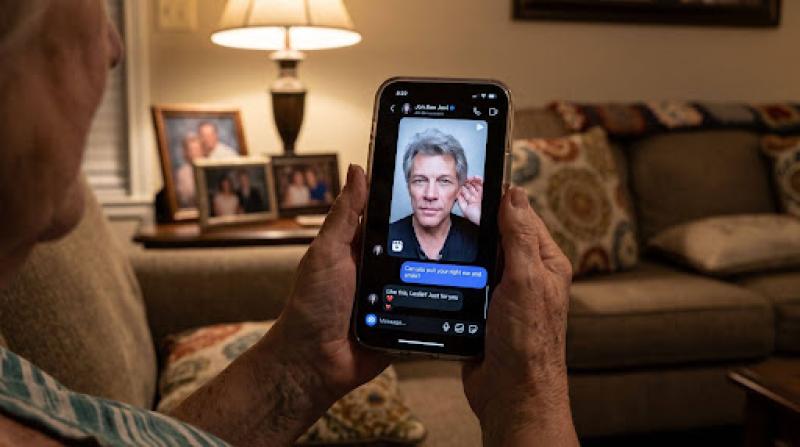
She asked him to pull his right ear, cross his eyes, and stick out his tongue. Five minutes later, "Jon Bon Jovi" sent back a video doing exactly that.
It wasn’t him. It was a cybercriminal using generative artificial intelligence tools, and by the time Leslie Pickett realized the truth, she had handed over more than $10,000 and pushed her Louisiana home toward foreclosure.
Pickett’s story—featured in National Geographic’s documentary special Super Scam Me, hosted by investigative journalist Mariana van Zeller—serves as a stark case study in the rapid evolution of online fraud. It also reinforces a crucial digital rule: when a celebrity slides into your private messages, it is almost certainly an impostor.
Pickett had been a fan of Jon Bon Jovi since high school. In late 2024, her daughter helped her set up an Instagram profile, and Pickett left a comment on what she believed was the rock star's official post. Within minutes, an account mirroring the singer’s name and likeness responded. Unfamiliar with platform verification badges, she assumed she had caught the real musician’s eye.
The impersonator immediately established an airtight cover story to isolate her:
Over the next several months, the scammer messaged Pickett day and night, professing love and sending floral arrangements directly to her doorstep. Even a skeptical family member who reviewed the audio and video clips was convinced the correspondence was genuine.
The real Jon Bon Jovi had no connection to the account or the scheme.
For years, cybersecurity specialists advised social media users to challenge suspected impersonators with spontaneous physical prompts—such as touching their nose or holding up specific fingers on camera—to prove they were not using pre-recorded footage.
When Pickett tested her correspondent by demanding a series of silly gestures, a high-quality video clip returned in five minutes flat. Because generative AI video and voice synthesis can now alter facial expressions, mimic cadence, and personalize dialogue in minutes, old visual safeguards are no longer reliable. As van Zeller observed during the investigation, modern deepfakes look polished, natural, and convincing.
The scammer practiced extensive patience, grooming Pickett for seven months before making any financial demands.
The initial request arrived in the form of a supposed VIP meet-and-greet pass for a Nashville concert, which the scammer claimed had to be cleared through management using cryptocurrency. When initial transfers encountered purported technical errors, the scammer directed Pickett to send money via Cash App, Venmo, PayPal, and Bitcoin ATMs.
The breaking point arrived in July 2025. The impostor claimed to be in Louisiana on a private visit and transmitted photos from a recognizable local hotel. An arranged security clearance call via Google Chat was abruptly disconnected, immediately followed by an urgent demand for substantial sums of Bitcoin. Recognizing that the promises of an in-person meeting were hollow, Pickett refused and sought outside assistance.
Working alongside the Super Scam Me documentary crew and an ethical hacker, investigators baited the impersonator with a trackable digital transaction, tracing the operation's IP address directly to Lagos, Nigeria. Pickett has since dedicated her time to recovering financially and educating others on social media deception.
If an account prompts you to join a private fan portal, buy management clearance, or click unfamiliar links, verify the web domain using ScamAdviser's website checker before submitting credentials or funds.
Embed: Mariana van Zeller's report on the Jon Bon Jovi romance scam
Adam Collins is a cybersecurity researcher at ScamAdviser who operates under a pseudonym for privacy and security. With over four years on the digital frontlines, he specialises in translating complex threats into actionable advice. His mission: exposing red flags so you can navigate the web with confidence.
