
EN
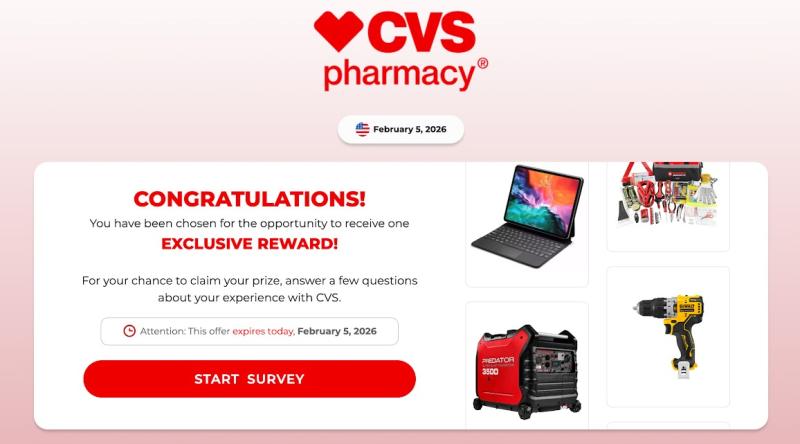
Some online promotions are using fake loyalty offers that look like they come from trusted brands. Many of these schemes misuse the name of CVS Pharmacy by using look-alike websites, misleading messages, and false reward promises to collect personal and financial details.
In this article, we explain how these misleading sites work, why they may be dangerous, how they misrepresent CVS, and how you can protect yourself.
Various online promotions claim to be associated with CVS and advertise “free rewards”, “loyalty bonuses,” or “exclusive gifts”. These offers are commonly distributed through:
Despite using CVS logos, brand elements, and familiar language, these promotions are not connected to CVS Pharmacy, Inc. or its legitimate loyalty program.
These promotions often follow a familiar pattern designed to appear trustworthy while encouraging quick action. Below are some of the most common methods used.
You might receive a text or email with a headline like “Claim Your CVS Points Reward!” or “Verify Your ExtraCare Account”. The message directs you to a suspicious site, such as Cvsloyalty.com, Varome.Ambercrown2.com, or a similar domain. These sites mimic CVS visuals and ask for:
The information collected through these forms can later be misused for identity-related or financial purposes.
Many of these websites use addresses that closely resemble legitimate CVS web pages but are slightly altered, such as:
Even though these domain names contain “CVS” or “loyalty,” they are not owned or operated by CVS.
In some cases, people receive SMS messages or phone calls that appear to come from CVS. These communications may:
In many cases, victims are told they must confirm personal information to receive a reward but the reward doesn’t exist.
CVS Pharmacy itself issues warnings about fraudulent messages and phishing attempts on its official security and help pages (cvs.com).
According to CVS:
These official notices help establish that suspicious domains and promotional messages are not authorized by CVS, even if they look convincing.
Whether you encounter a website, email, text, or phone call claiming to be from CVS, look out for these warning signs:
Unexpected Messages:
If you didn’t sign up for a loyalty program or have no reason to be contacted, be skeptical of sudden “rewards” messages.
Strange URLs:
Official CVS websites use domains like cvs.com. Anything else, even if it contains the word “CVS” may be fraudulent.
Requests for Sensitive Data:
Legitimate companies typically won’t ask for Social Security numbers, full credit card details, or Medicare information through a pop-up form or text link.
Urgency and Pressure:
Scams often create a sense of urgency, for example: claim now or lose your reward, to push you into acting before thinking.
If you receive a suspicious message or find a site claiming to offer CVS rewards, then:
Here are some simple habits that help reduce the risk of falling for scams:
Unauthorized promotions sometimes rely on familiar brand names like CVS to appear credible. However, websites such as Cvsloyalty.com, Varome.Ambercrown2.com, and similar domains are not connected to CVS Pharmacy’s official loyalty programs.
By knowing the warning signs, understanding how these schemes operate, and relying on official sources like cvs.com for information, you can protect your personal data and avoid falling for deceptive loyalty offers.
Stay cautious, verify every offer, and remember that genuine rewards programs will never ask for sensitive information through unverified links or pop-ups.
Disclaimer: This article has been written by a Scam Fighter Contributor. If you believe the article above contains inaccuracies or needs to include relevant information, please contact ScamAdviser.com using this form.
